
set but not forgotten
In this first-ever article, I'll be giving an in-depth look at the Boye Toyes fuzz. But before we begin that journey, allow me to elaborate on the Boye Toyes effect design philosophy: as astute observers will note, the Boye Toyes effects pedals have no knobs available on their outside panel. However, there are some inviting screws on the top side of each pedal. If you unscrew the top, you'll find a variety of tiny potentiometers (often scattered among a series of different circuit boards). With a small screwdriver, you can adjust various parameters associated with each pedal. Upon closing the pedal, your parameter settings will remain the same until you open the pedal up and adjust again. In this way, your effect is safe from unintentional adjustments at all times, and will sound "the same" when you turn it on again. Of course, things never sound exactly the same - rooms are different, amplifiers are different, effect gain-staging is different, hearing damage is real and progressive. But the hope and centerpiece of the design philosophy is that by making certain things harder to change, some sonic stability and consistency can be achieved. Both the Ecquinb and Ex-Queen embrace this approach. In order to illustrate this approach, I've chosen to do a deep dive of the Boye Toyes Fuzz and all of its parameters (in the accompanying sound clips, I play the melody of Ornette Coleman's "Law Years" on a Hohner Pianet T)...
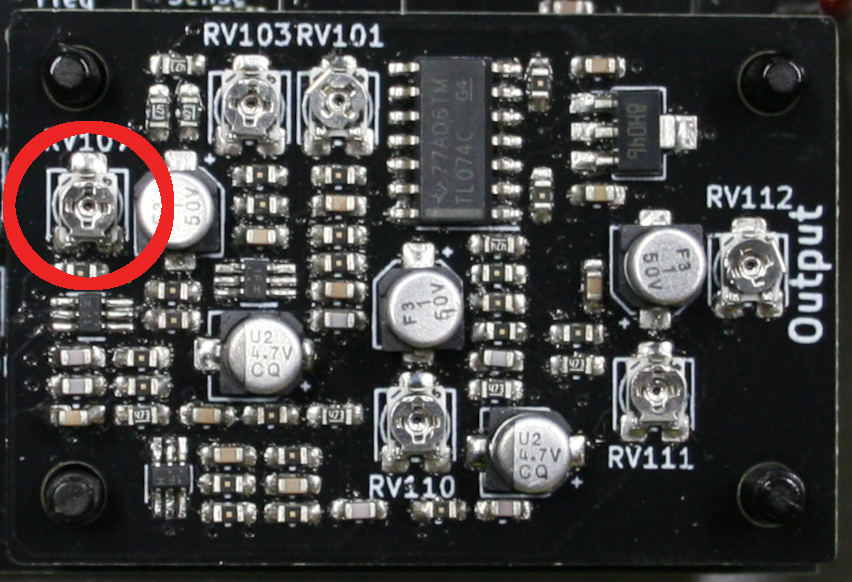
Starting with the leftmost potentiometer, let's walk through the various parameter changes one can make on the Boye Toyes Fuzz. The leftmost potentiometer, RV107, controls the input to the third gain stage of the fuzz. Turned all the way to the left is maximum, for full transmission of signal. All the way to the right will cut the signal entirely. If you do this, you'll want to supplement with some feedback using RV111 (more on this later!)...
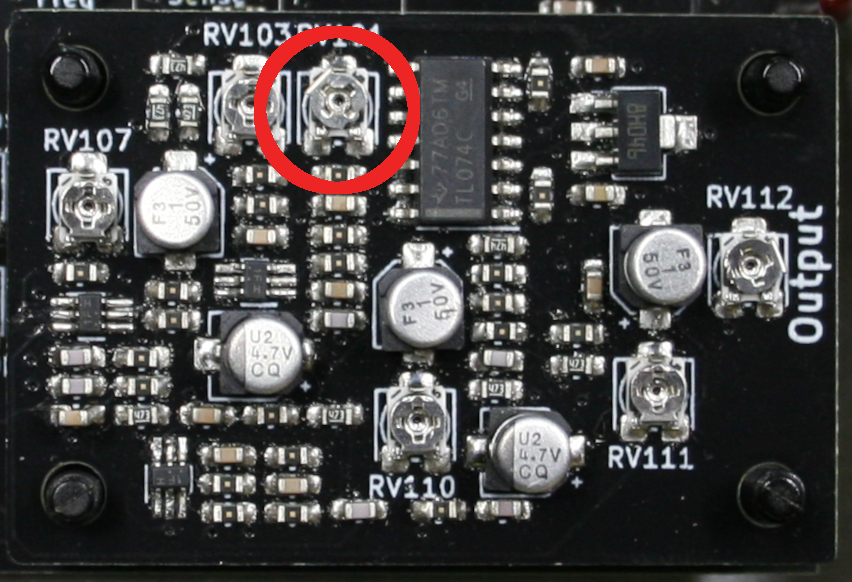
Next, we have RV101 (note: we are skipping over RV103, which is not present on all designs -- RV103 has a very subtle effect, so subtle that it was omitted on later designs). RV101 controls the threshold of the fuzz's gate. All the way to the left is minimum, where all sound, including any stray noise, will get let through and amplified. This gets quite chaotic. Turn it all the way to the right and the gate will be at maximum, letting sound through only when you are playing.
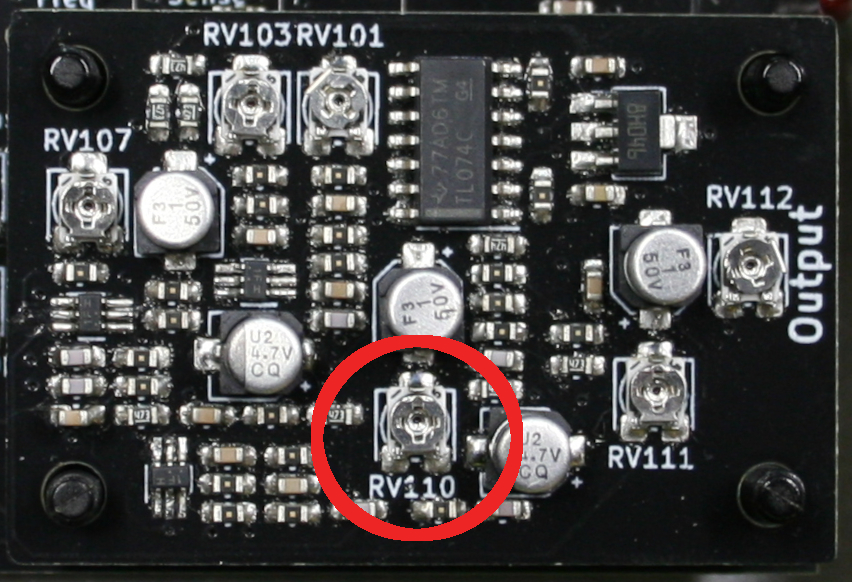
Let's turn next to one of the simpler adjustments: tone. RV110 controls the overall tone of the fuzz. Turn it left for a more bass-centric approach, and turn it right for a bias towards treble.
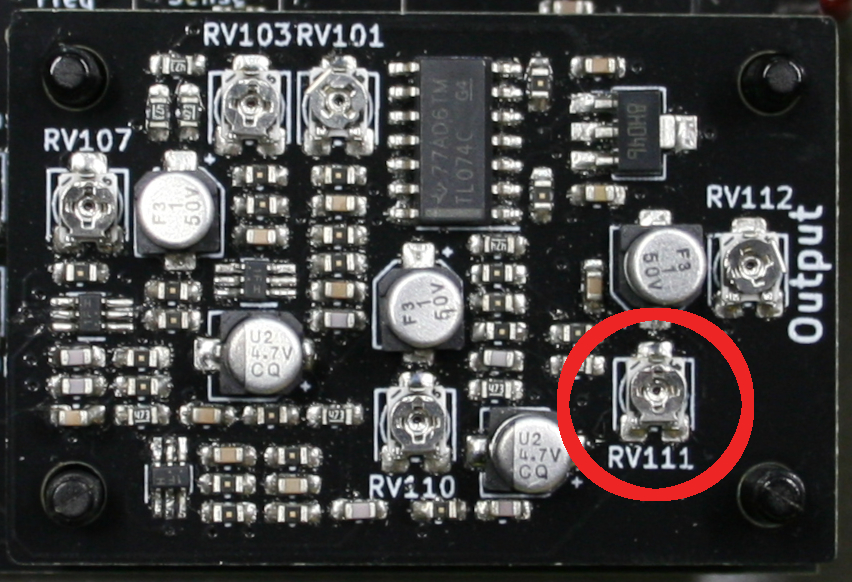
Now we get to one of the most exciting controls, RV111. This controls the amount of feedback fed back into the fuzz circuit. When this is turned towards the left, less feedback is applied (but there's always a little). Turn it all the way to the right for maximum feedback, which can get some pretty interesting, interactive sounds!
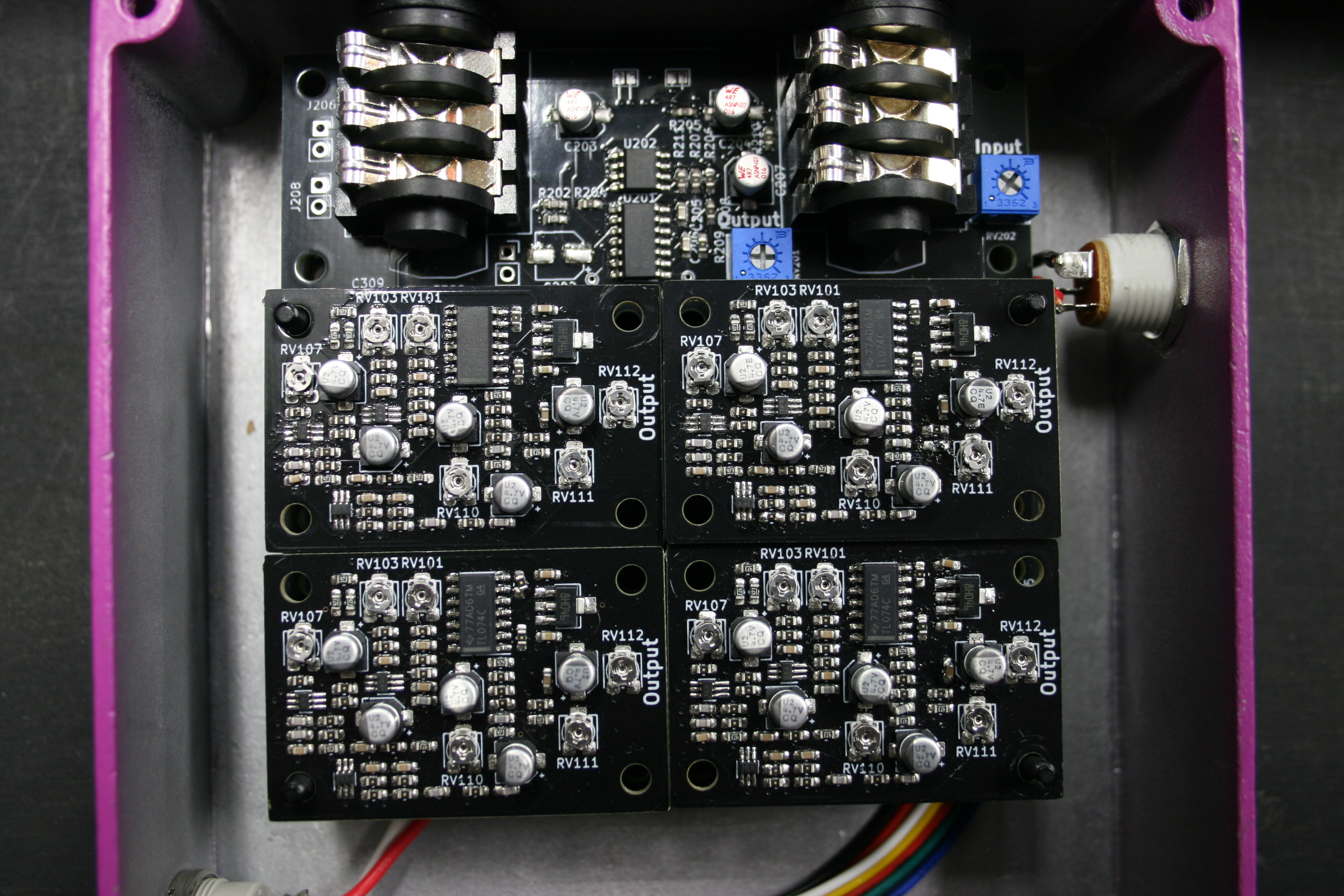
What if you can't make up your mind? Those of you who are lucky enough to own an Ecquinb could put four fuzzes into it! And then you could have a random configuration of fuzzes, each of which is set to potentially drastically different settings...